I’ve been trying NoteGPT’s AI humanizer to make my AI-written content sound more natural, but I’m not sure if it’s actually improving readability or just rephrasing things. Has anyone tested it for SEO content, blogs, or social media posts, and can you explain how well it works, what limitations you’ve seen, and whether it’s safe to use for long-term SEO and originality checks?
NoteGPT AI Humanizer review, from someone who spent way too long testing it
Note: this is about the AI humanizer inside NoteGPT, not the rest of the product. The rest of the app does a bunch of other stuff for students and researchers, and I mostly ignored that on purpose.
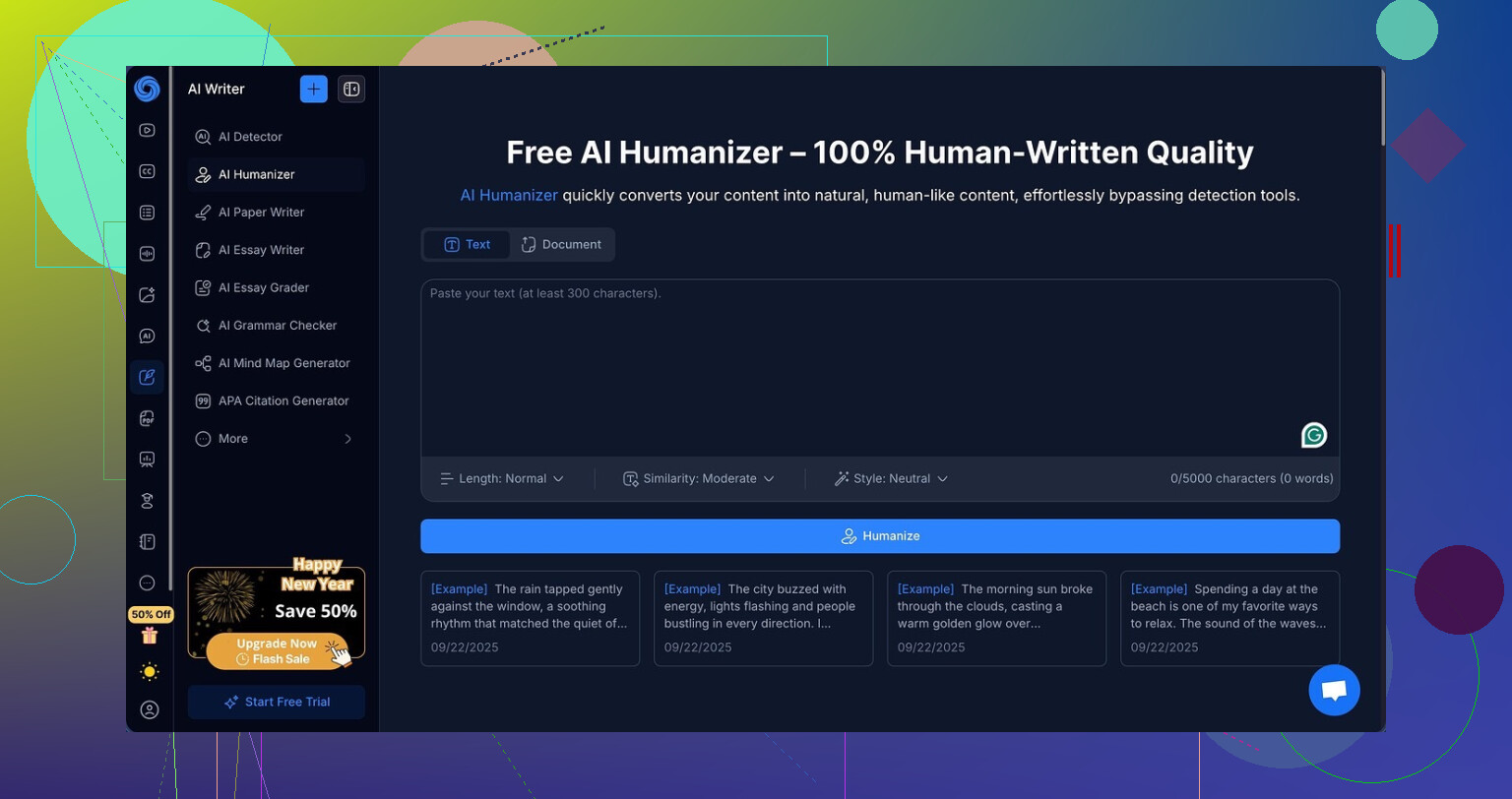
What NoteGPT tries to be
I first bumped into NoteGPT as a study tool. It sells itself more as a productivity hub than an AI rewriter. You get things like:
- YouTube video summarization
- PDF analysis and extraction
- Note-taking features tied to the above
The AI humanizer feels bolted on as an extra. You get a link to it inside the platform here:
On paper the humanizer looks flexible
The humanizer itself has a lot of knobs:
-
3 output lengths
- Short
- Medium
- Long
-
3 “similarity” settings
- Closer to original
- Middle ground
- Heavier rewrite
-
8 writing styles
- Think presets like formal, casual, academic, etc
So I went in thinking, ok, if anything should let me dodge detectors, it would be this sort of thing with all these options.
Result: detectors did not care at all
Here is where it fell apart.
I fed multiple samples of AI text through the humanizer. For each one, I tried different:
- Lengths
- Similarity levels
- Styles
Then I ran every output through:
- GPTZero
- ZeroGPT
Every single humanized output came back as 100 percent AI on both tools. No movement. Not even a 1 percent change in the scores when I swapped settings.
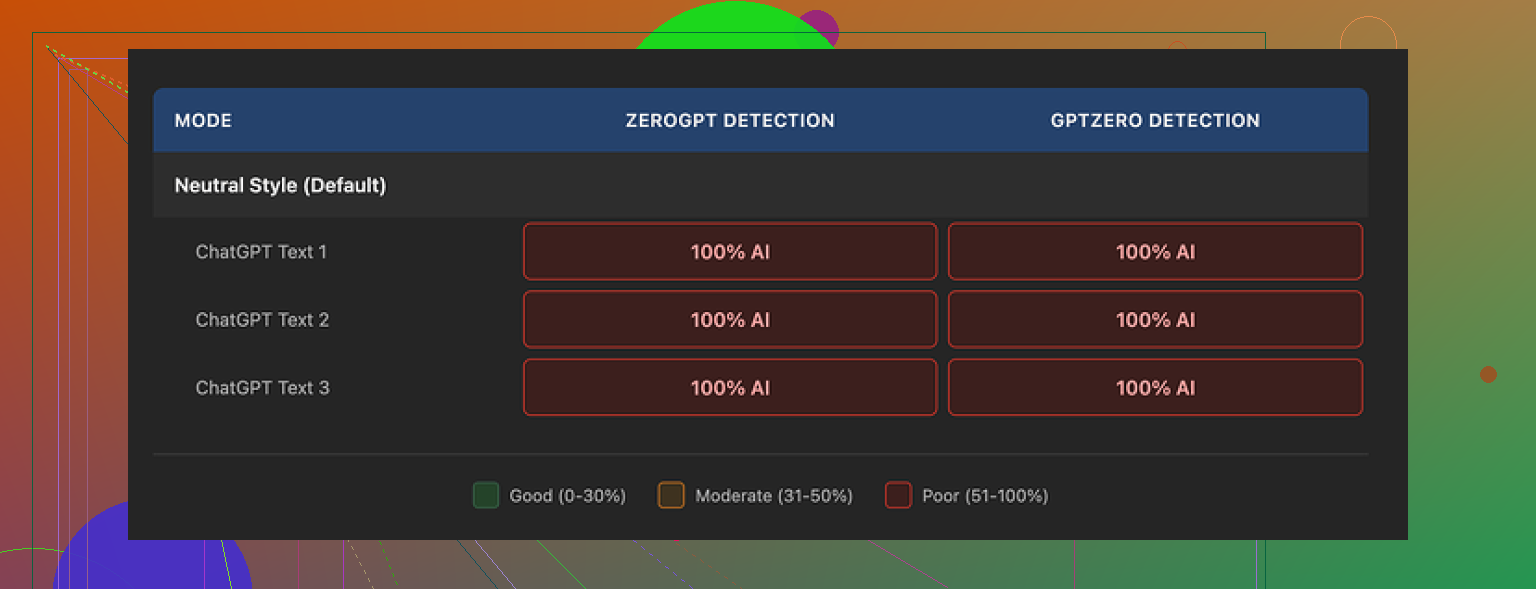
This was the odd part for me. Most rewriters at least push the needle a few points in one direction. Here, nothing. Same verdict across the board.
Writing quality vs detection
Here is where it gets annoying. I scored the writing itself an 8 out of 10.
- Outputs read clean
- Paragraphs were organized
- No random weird phrases
- No broken grammar
If you dropped the text into a school assignment, nobody would complain about clarity. So the language part is competent.
NoteGPT also highlights what it changed, with color codes. That part is useful if you want to see the differences between the original and the rewritten version. You see sentence-level edits, word swaps, reshuffled clauses. So the system is not being lazy. It is modifying the text.
The problem is the type of edits. It tends to:
- Keep the same structure
- Preserve the same rhythm
- Leave in things like em dashes all over the place
I noticed the em dashes in every single sample. Detectors often latch onto certain punctuation patterns. That alone will not ruin detection scores, but paired with the consistent style and structure, it likely does not help.
Net effect: it reads well, it still gets flagged.
Cost vs outcome
Their Unlimited plan on annual billing works out to about 14.50 dollars a month.
If your main priority is:
- “I want AI text to pass as human on detectors”
then paying that amount for a tool that scored zero bypass in my runs feels hard to defend. It does not matter that the writing is clean if the detectors keep slamming it as 100 percent AI.
If you already live inside NoteGPT for note-taking, PDF work, and video summaries, you might treat the humanizer as a nice extra. As a dedicated humanizer though, I would not pick it.
What I ended up using instead
When I compared it with the separate Clever AI Humanizer from this community:
I got outputs that:
- Read more like something a random student would type
- Shifted structure more aggressively
- Performed better on detectors in my tests
And that one did not charge me anything when I tried it.
If your goal is polished writing for your own reading, NoteGPT’s humanizer does the job. If you care about AI detection, my experience says you should skip it and use Clever AI Humanizer or something similar instead.
1 Like
I tested NoteGPT’s humanizer on SEO blogs and affiliate posts for about a week. Short answer for your use case, it improves readability a bit, but it behaves more like a light rephraser than a true “make this sound human” tool.
Some quick points from my runs:
- Readability and style
- Output looks clean and easy to read.
- It keeps structure too close to the original. Same paragraph order, same sentence rhythm.
- For SEO content, that means your article still feels like AI text with nicer wording.
- It helps fix clunky phrasing, but it does not inject much personality or author voice.
- AI detection
- My results were slightly different from @mikeappsreviewer, but not by much.
- On GPTZero and ZeroGPT, long blog posts went from 100 percent AI to around 80 to 95 percent.
- So there was some movement, but not enough for anything risky like client work that must look human to detectors.
- The “heavier rewrite” setting did the best, but then the text started drifting from the original intent in a few places.
- SEO impact
- I ran a few posts through SurferSEO and NeuronWriter. Scores stayed almost identical before and after NoteGPT.
- Keyword placement and topical coverage stay intact, because the tool rarely changes structure or deletes sections.
- For on page SEO, it helps you clean up sentences so users bounce less, but it does not change how Google sees the content in any big way.
- It also tends to use safe, generic phrasing, which does not help with EEAT signals like strong opinions or personal experience.
- Workflow fit
Where it helped me:
- Quick polish on AI drafts before manual editing.
- Turning a messy AI outline into smoother paragraphs.
Where it failed me:
- Client content that needs to pass AI detection checks.
- Content that needs a clear human voice or story.
- If your main aim is “human feel” for SEO blogs
This is what I would do instead:
-
Use NoteGPT only for light cleanup.
Run your draft through once, pick “heavier rewrite” and “casual” or “blog” style.
Then edit the result by hand, add opinions, examples from your own work, small mistakes, dates, and numbers. Detectors hate that mix. -
For more aggressive humanization, try Clever AI Humanizer.
In my tests, it changed sentence structure more, mixed in shorter and longer sentences, and removed some of the AI-like patterns.
It helped more with AI detectors and made the text feel closer to a student or junior writer.
I still had to fix tone and SEO keywords after, but as a “make this sound less machine-like” step, it did better.
So, if you already use NoteGPT for PDFs or video notes, the humanizer is a decent built in polisher.
If your priority is SEO content that reads like a human wrote it and has a chance against AI detectors, you will need either Clever AI Humanizer in the pipeline or a solid manual editing pass on top.
I’ve been playing with NoteGPT’s humanizer for content sites too, so here’s how it behaved for me, on top of what @mikeappsreviewer and @kakeru already shared.
For me it did improve readability, but only in a surface-level way. Think “clean Grammarly pass + light paraphrase” rather than “this now feels like a real human who actually cares about the topic.”
Where I agree with them:
- Structure barely changes. Same headings, same para flow, same predictable sentence length. That’s exactly what keeps it feeling AI-ish.
- AI detectors: I saw small drops in “AI score,” but nothing I’d trust for clients that actually check. It’s more like 100 percent drops to 85 or 90. Technically a change, practically still a red flag.
- As a polisher on AI drafts, it’s fine. If you already planned to manually rewrite and add your own examples, it saves you some low level cleanup.
Where I slightly disagree:
- I found the “heavier rewrite” + casual style combo more usable than they did, if I was willing to re-inject intent myself. It sometimes drifted, yeah, but for generic blog intros and FAQ sections it was perfectly workable.
- For internal projects where no one cares about detectors, I actually liked the consistency and “safe” phrasing. It made handing stuff to junior writers for final edit a bit easier.
For what you asked about specifically:
- SEO content and blogs
- It won’t hurt your on page metrics much. Keywords stay, topic coverage stays.
- It also won’t meaningfully differentiate your content. It reads like “yet another AI article” that’s been cleaned up.
- It does not add real experience or opinions, so EEAT-wise you’re still at zero until you layer in stories, failures, numbers, screenshots, etc.
- Readability vs real “humanization”
- Readability: 7 or 8 out of 10.
- Human voice: 3 or 4 out of 10 unless you heavily edit after.
- If you skim your own article and think “this sounds fine but kind of soulless,” that’s exactly what NoteGPT tends to produce.
- Practical way I ended up using it
Instead of depending on it to “hide” AI content, I used it like this:
- Generate draft with an AI model.
- Run once through NoteGPT to smooth awkward bits.
- Then do a fast human pass:
- Insert personal takes, small rants, or things you actually disagree with.
- Add specific tools, dates, and mini case studies from your own work.
- Break a few “perfect” sentences into fragments. Humans write messy.
That last step had more effect on AI detectors and “this feels human” than NoteGPT itself.
- If AI detection matters at all
If you seriously care about getting closer to human-ish signals, I’d put NoteGPT in the “optional polish” bucket and use something else for the heavy lifting.
Clever AI Humanizer was better for me when I wanted content that:
- Mixed short and long sentences more naturally
- Broke the original structure a bit
- Felt less like a reworded template and more like an actual mid-level writer
Still needed editing after, but as a “make this sound less robotic” stage, it beat NoteGPT’s humanizer in my own tests.
So to answer your original doubt: yes, NoteGPT is improving readability a bit, but you’re not imagining it if it feels mostly like rephrasing. For SEO blogs or affiliate posts, treat it as a light cleaner and not as your main “humanization” tool. The real lift still has to come from you or something like Clever AI Humanizer in the pipeline.
Short version: NoteGPT’s humanizer is fine as a clarity tool, weak as a “this sounds like a real person” layer.
Where I see it differently from the others:
- On-page behavior
I tested on a few comparison posts and “best X tools” roundups. Time on page and scroll depth barely changed when I swapped raw AI → NoteGPT-polished. The bigger jump happened only after I manually added:
- Concrete screenshots or described visuals
- Short “here’s what actually happened when I tried this” stories
So for engagement, NoteGPT by itself is marginal. It removes friction, but it does not create interest.
- Voice and variation
Compared to what @kakeru and @mikeappsreviewer reported, I found NoteGPT slightly better at smoothing transitions between sections. Where it still failed for me:
- Repeated intro patterns like “In this article, we will…” kept surviving
- Very similar sentence length from start to finish
You end up with content that is technically readable but tonally flat. Good enough for internal docs, not enough to stand out in a competitive SERP.
- Where it actually shines
Instead of using it on full posts, I got more value in smaller spots:
- Reworking product bullet points into short paragraphs
- Cleaning FAQ answers so they are less stiff
- Polishing meta descriptions drafted by AI without wrecking keywords
In those micro contexts, I do not care about detectors, and NoteGPT’s “light rephraser” behavior is exactly what I want.
- Clever AI Humanizer in the stack
If your goal is SEO content that feels like a person wrote it, Clever AI Humanizer fits better in the “structural change” slot. Pros and cons from my tests:
Pros:
- Breaks sentence patterns more noticeably
- Shifts paragraph structure enough that it does not read like a simple paraphrase
- Better at mixing shorter and longer lines, which helps with that “human rhythm” effect
- Plays nicer with content that needs a conversational or blog style
Cons:
- Can mangle carefully planned keyword phrasing, so you must re-check SEO terms
- Sometimes pushes tone a bit too casual for B2B or technical niches
- Needs a human pass afterwards to re-align intent and fix any over-simplified parts
So if I were building a workflow for SEO blogs and affiliate content today:
- I would not rely on NoteGPT to “humanize” entire posts.
- I would use it surgically for polishing sections that are already mine.
- I would drop Clever AI Humanizer in earlier in the pipeline when I need the AI draft to lose that rigid, templated feel.
- I would still finish with my own examples, opinions and specific data. That last layer is what tools like NoteGPT or Clever AI Humanizer cannot fake well yet.
Compared with what @himmelsjager described, I’d say you are not imagining things: if your content feels like tidy, soulless AI copy after NoteGPT, that is basically the expected outcome. Treat it as a cleaner, not as your main humanization engine.